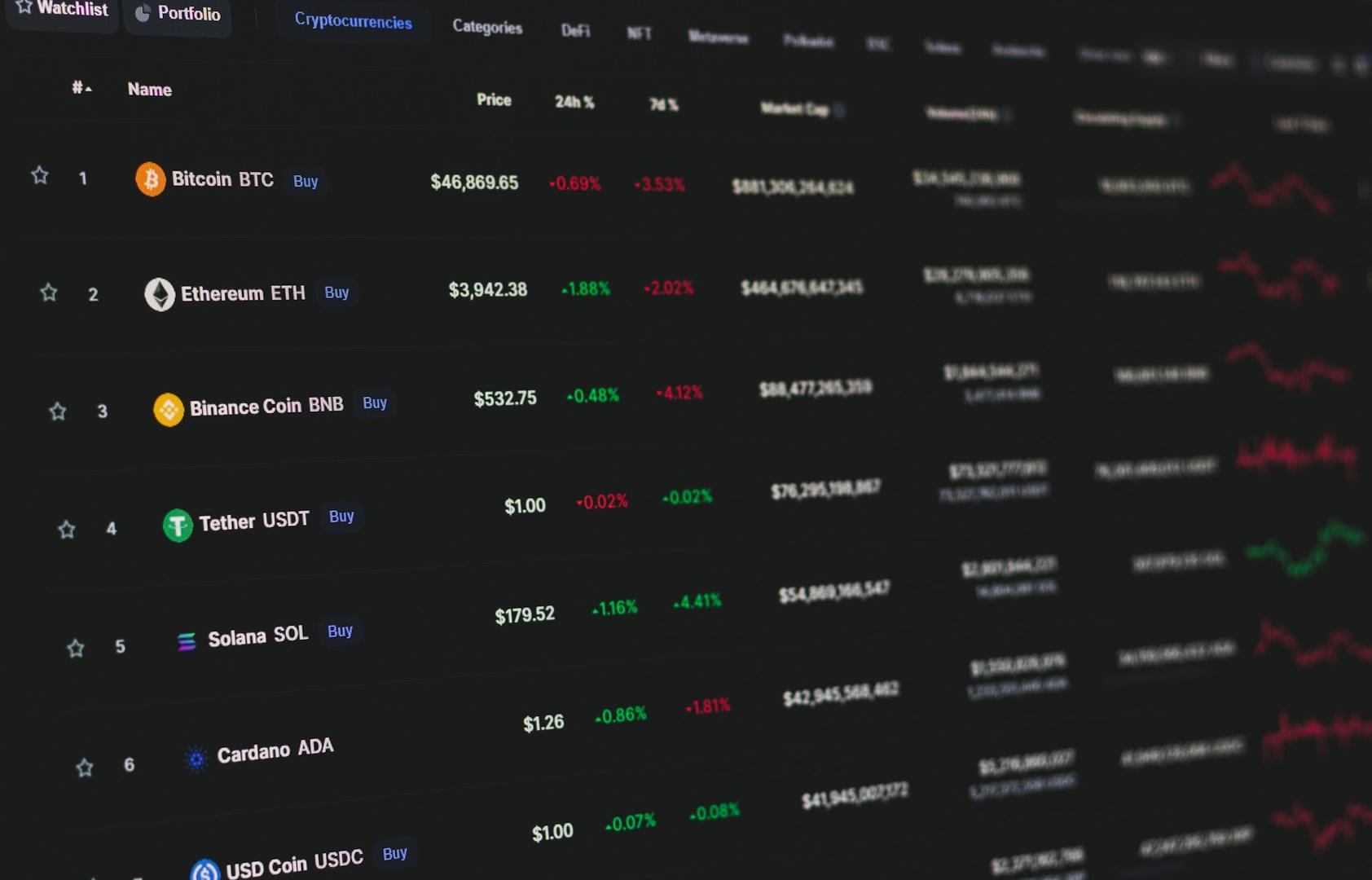
Why Bitcoin's Lack of Stock Market Sync is Not a Cause for Concern
 highabhi
Bitcoin's price movements have long been closely tied to those of the traditional stock market, with many investors using the cryptocurrency as a hedge against market volatility. However, recent stock market rallies have seen Bitcoin lag behind, leaving some investors scratching their heads and wondering if a disconnect between the two markets has formed.
While this may seem like cause for concern, experts say there's no need to be alarmed. The reasons behind Bitcoin's lack of participation in the recent stock market rally are rooted in fundamental factors that are unlikely to change anytime soon.
One reason for Bitcoin's lag is the cryptocurrency's unique store-of-value proposition. Unlike traditional assets like stocks and bonds, Bitcoin's value is not tied to any specific company or economy. Instead, its value is derived from its limited supply and the growing demand for it as a store of value and medium of exchange.
This means that Bitcoin's price movements are influenced by a different set of factors than those that drive the stock market. For example, while a strong earnings report from a company like Apple might send its stock price soaring, a similar report from a company like Tesla might have little impact on Bitcoin's price.
Another reason for Bitcoin's lag is the cryptocurrency's limited correlation with traditional assets. While some investors might view Bitcoin as a form of digital gold, its price movements are not directly tied to the price of gold or other commodities. This means that Bitcoin's price can diverge from that of traditional assets, even during times of market turmoil.
This limited correlation is also reflected in the cryptocurrency's low beta value. Beta is a measure of an asset's volatility relative to the overall market, with a beta of 1 indicating that the asset's price movements are directly tied to those of the overall market. Bitcoin's beta value is significantly lower than that of traditional assets, suggesting that its price movements are less correlated with those of the overall market.
Finally, it's worth noting that Bitcoin's lack of participation in the recent stock market rally may be due in part to the cryptocurrency's growing maturity as an asset class. As more investors and institutions become involved in the cryptocurrency market, it's likely that Bitcoin's price movements will become more closely tied to those of traditional assets. However, for now, the cryptocurrency remains a distinct and separate asset class with its own unique characteristics and drivers.
In conclusion, while Bitcoin's lack of participation in the recent stock market rally may be cause for concern for some investors, it's not a cause for alarm. The reasons behind this disparity are rooted in fundamental factors that are unlikely to change anytime soon, and Bitcoin remains a unique and valuable asset class that is worth considering for investors looking to diversify their portfolios.
"Bitcoin's unique store-of-value proposition and limited correlation with traditional assets make it a distinct and valuable asset class that is worth considering for investors looking to diversify their portfolios."
- Bitcoin's unique store-of-value proposition sets it apart from traditional assets like stocks and bonds.
- Limited correlation with traditional assets means that Bitcoin's price movements are not directly tied to those of the overall market.
- Low beta value suggests that Bitcoin's price movements are less correlated with those of the overall market.