Southern Philippines Shaken by 6.2 Magnitude Earthquake: A Delicate Balance of Seismology and Human Resilience
 Arun
Arun
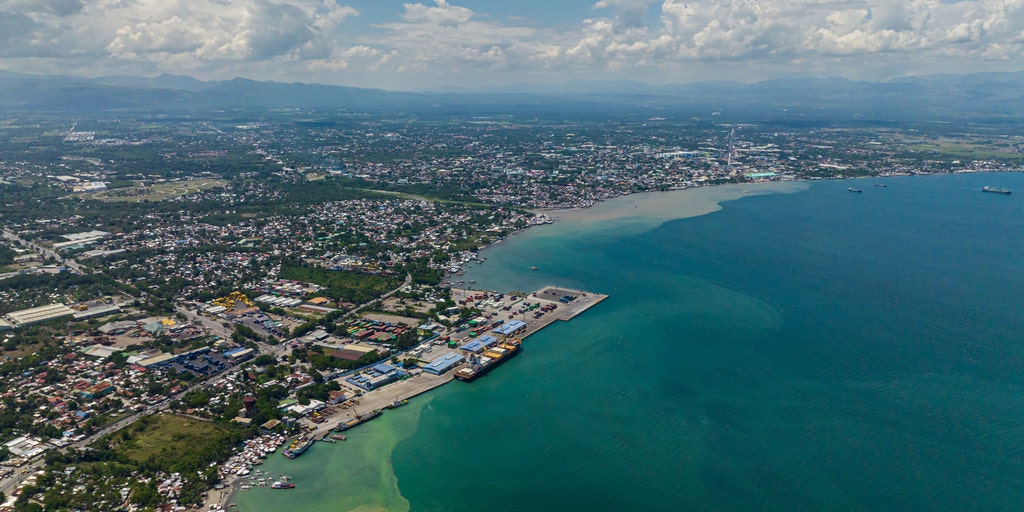
A massive 6.2 magnitude earthquake has shaken the southern Philippines, leaving a trail of aftershocks and raising concerns about the region's seismic activity. The quake, which struck off the coast of Balut Island in Davao Occidental, has sent shockwaves throughout the region, with reports of aftershocks and tremors felt in nearby areas.
The Philippines is located in the Pacific Ring of Fire, a 40,000km horseshoe-shaped zone of intense seismic and volcanic activity that is home to over 75% of the world's active volcanoes. The country's location in this region makes it prone to earthquakes, with the Philippines experiencing frequent tremors and quakes.
The 6.2 magnitude quake is the latest in a series of seismic events to strike the Philippines in recent weeks, with several tremors reported in the region in the past month. While the exact cause of the quake is still unknown, experts believe that it may be related to the movement of tectonic plates in the region.
The impact of the quake has been felt across the region, with residents and visitors in affected areas reporting feelings of panic and anxiety. While there have been no reports of major damage or casualties, the quake has raised concerns about the region's geological stability and the potential for future seismic activity.
The Philippine Institute of Volcanology and Seismology (PHIVOLCS) has reported that the quake was centered at a depth of approximately 10km, with the epicenter located off the coast of Balut Island. The PHIVOLCS has also reported that the quake was not a tsunami trigger, but warned of the potential for aftershocks and further seismic activity in the region.
Residents and visitors in affected areas have been advised to remain vigilant and to follow evacuation procedures if necessary. The Philippine government has also set up emergency response teams to assist with relief efforts and to provide support to those affected by the quake.
In the aftermath of the quake, experts and residents alike are left wondering about the delicate balance between seismology and human resilience. While the Philippines is prone to earthquakes, the country's residents have shown remarkable resilience in the face of this natural disaster.
The question now is whether the region can learn from past experiences and adapt to the challenges posed by seismic activity. With the Philippines' unique location in the Pacific Ring of Fire, the country's ability to mitigate the impact of earthquakes will be crucial in the years to come.
As the region continues to recover from the aftermath of the quake, one thing is clear: the people of the Philippines are a testament to human resilience in the face of adversity. Their ability to cope with the challenges posed by seismic activity will be crucial in maintaining the delicate balance between seismology and human resilience.