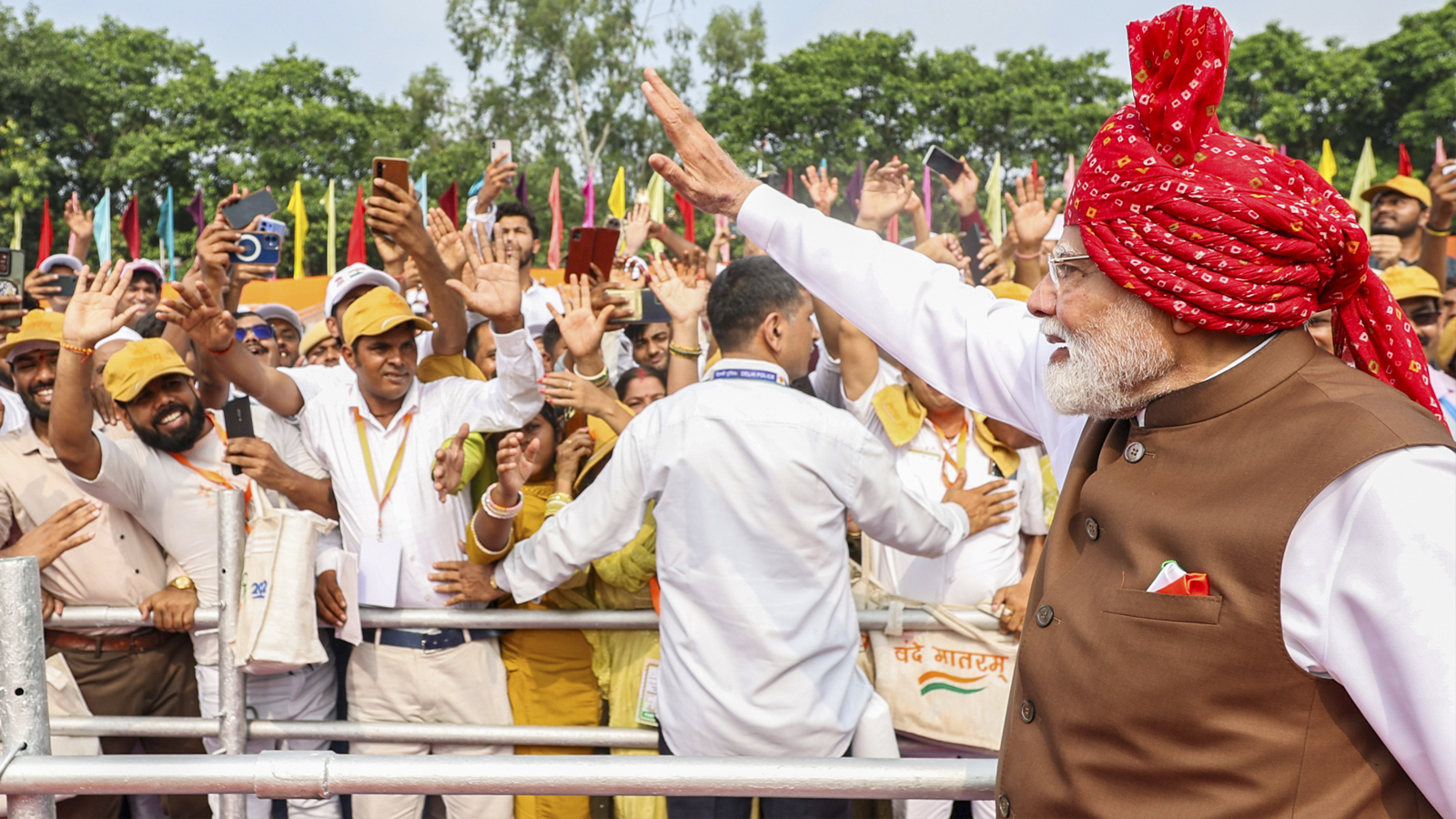
PM Modi Envisions India's Digital Future Amidst Global Tech Shift
 itsprem
Prime Minister Narendra Modi recently visited Melbourne, where he emphasized the significance of embracing technological advancements in driving India's growth and progress. During his trip, Modi outlined the country's vision for industrial transformation and its ambitious plans for adopting next-generation 6G technology.
The visit comes at a time when the world is witnessing a significant shift towards digitalization, with countries scrambling to adapt to the rapidly changing technological landscape. India, with its vast and growing digital population, is well-positioned to capitalize on this trend. Modi's plans for industrial transformation aim to harness the power of technology to stimulate economic growth, enhance productivity, and create new opportunities for the country's workforce.
At the heart of India's industrial transformation strategy is the adoption of 6G technology. The next-generation network promises to revolutionize the way we communicate, work, and live, with faster data speeds, lower latency, and greater connectivity. Modi's government recognizes the potential of 6G to drive innovation, boost economic growth, and enhance the overall quality of life for Indians.
The Prime Minister's emphasis on 6G technology is part of a broader effort to position India as a global leader in innovation and technology. With its large and skilled workforce, India is already a hub for IT and software development, and the adoption of 6G technology is expected to further strengthen its position. Modi's government is working closely with industry stakeholders, academia, and research institutions to develop the necessary infrastructure, skills, and policies to support the widespread adoption of 6G technology.
The benefits of 6G technology extend beyond economic growth and innovation. It has the potential to transform various aspects of Indian society, including healthcare, education, agriculture, and transportation. For instance, 6G technology can enable the widespread adoption of telemedicine, remote healthcare, and personalized medicine, improving healthcare outcomes and accessibility. Similarly, it can enhance the quality of education by enabling seamless online learning, interactive simulations, and virtual reality experiences.
Modi's visit to Melbourne and his emphasis on industrial transformation and 6G technology mark a significant milestone in India's journey towards becoming a global leader in innovation and technology. As the world continues to navigate the complexities of the digital age, India's commitment to harnessing the power of technology is likely to pay significant dividends in the years to come.
The success of India's industrial transformation strategy will depend on the effective implementation of its plans, as well as the collaboration between government, industry, and academia. With its strong track record of innovation and technological adoption, India is well-positioned to drive growth and prosperity in the years to come. As the world looks to India as a model for industrial transformation, the country's commitment to 6G technology and digitalization is likely to have far-reaching consequences for the global economy and society.
India's journey towards becoming a global leader in innovation and technology is still in its early stages. However, with its strong foundation, ambitious plans, and commitment to technological adoption, the country is poised to make significant strides in the years to come. As the world continues to evolve and adapt to the changing technological landscape, India's focus on 6G technology and industrial transformation is a timely and important step towards driving growth, innovation, and prosperity.